Published Nov 26, 2026 by Xiph
In January 2025, WhatsApp told about 90 of its users that their phones had been targeted with spyware. They included journalists and members of civil society. None of them needed to click a link or install anything for the attack to work. The spyware, called Graphite, was built by a private company and sold to governments.
This is mercenary spyware: commercial hacking tools sold to states. It is rare, expensive and aimed at specific people, but it shapes how everyone should think about phone security. This post explains what it is, what “zero-click” means, the three products you will see in the news, and what you can do about it.
What mercenary spyware is
Mercenary spyware is surveillance software developed by private companies and licensed to government agencies, typically police and intelligence services. Google’s researchers track around 40 such vendors and say most sell primarily to nation-states.
Once on a phone, it can hand the operator messages, contacts, files, location, and control of the microphone and camera. It does not break the encryption in apps like WhatsApp or Signal. It reads messages on the device itself, before they are encrypted or after they are decrypted.
These tools are costly. Apple describes these attacks as multimillion-dollar efforts that do not stay effective for long and are aimed at particular people because of their role or work. That is the key difference from ordinary malware, which is cheap and sprayed at as many people as possible. It is also different from the “stalkerware” apps sometimes installed by abusive partners, which usually need physical access to the phone and are far less sophisticated.
The vendors prefer terms like “lawful intercept” or “cyber intelligence”. Researchers and technology companies call it mercenary spyware because it is hacking capability for hire.
What “zero-click” means
Most phone attacks need the victim to do something: tap a link, open an attachment, install an app. Security people call these one-click attacks, and good habits defeat many of them.
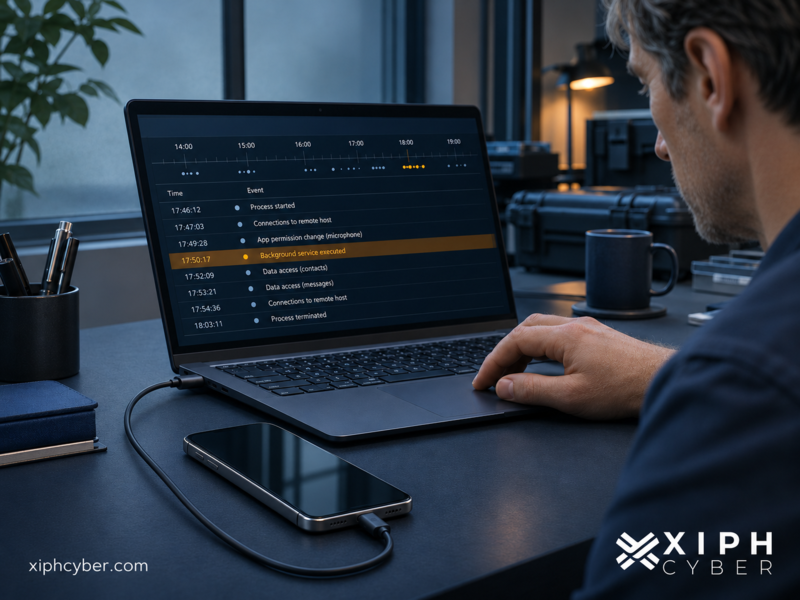
A zero-click attack needs nothing from you. A specially crafted message or call arrives, the phone processes it automatically, and a flaw in that processing lets the attacker in. In cases confirmed by researchers, the target did not have to open or even see the message. It is the digital equivalent of a parcel that unlocks the front door simply by being delivered.
Zero-click attacks usually rely on zero-days, which are software flaws exploited before the maker has released a fix. Google counted 90 zero-days exploited in 2025. Of the 42 it could attribute, commercial surveillance vendors were behind 15, ahead of state-sponsored espionage groups for the first time.
The uncomfortable implication is that careful behaviour does not stop a zero-click attack. Protection has to come from the phone’s software and settings, which is why the advice later in this post looks different from standard phishing guidance. Spyware vendors are also alleged to use one-click links where those work, so caution with links still matters.
The three names to know
Dozens of vendors operate in this market, but three products account for most of the headlines.
Pegasus (NSO Group)
Pegasus, made by Israel’s NSO Group, is the best-known product. NSO says its customers are government agencies, approved by Israel’s Defence Ministry, that use Pegasus to pursue terrorism and serious crime.
A US court found NSO liable for hacking about 1,400 WhatsApp users, and in October 2025 a judge permanently barred it from targeting WhatsApp. A jury awarded about US$167 million in damages, later reduced to roughly US$4 million. The United States blacklisted the company in 2021. Pegasus is still in use: in October 2026, Citizen Lab reported with high confidence that a Serbian university rector and supporter of the student protest movement had been hacked with it this year.
Predator (Intellexa)
Predator comes from Intellexa, a consortium founded by a former Israeli intelligence officer. Like Pegasus, it can infect phones through zero-click attacks. The US Treasury sanctioned Intellexa in 2024, saying its technology had been used to target American officials and journalists.
Predator is best known for the Greek “Predatorgate” scandal, in which at least 87 people were surveilled. In February 2026 an Athens court convicted four people linked to Intellexa, including its founder, though the sentences are suspended pending appeal. The Greek government has consistently denied buying or using Predator.
Graphite (Paragon)
Graphite is made by Paragon Solutions, founded in Israel in 2019 and reportedly acquired by a US private equity firm in late 2024. Paragon has positioned itself as the responsible alternative, saying it sells only to governments that respect fundamental rights and that Graphite accesses messaging apps, not the whole phone.
The WhatsApp case tested that claim. Citizen Lab examined phones belonging to people WhatsApp had notified in Italy, including sea-rescue activists, and found forensic traces of Graphite. Italy acknowledged being a Paragon customer, and the deployment was suspended pending an investigation. Later in 2025, iPhones running up-to-date software were also found to have been compromised, and Apple issued a fix. Citizen Lab believes the 90 or so people WhatsApp notified are probably a fraction of the total.
There is an Australian angle. Citizen Lab’s mapping of Paragon’s server infrastructure identified suspected customer deployments in six countries, including Australia. That is not evidence of misuse here, and Paragon said the findings contained inaccuracies without specifying them. It does show these tools are not confined to authoritarian states.
Who buys it, and who gets targeted
The customers are governments. Vendors say their products are licensed for investigating terrorism and serious crime, and there are lawful uses of that kind. The problem documented again and again is who else ends up on the target list. Citizen Lab argues that selling only to democracies does not prevent abuse, pointing to repeated cases involving journalists and government critics.
Apple’s threat notifications are aimed at people such as journalists, activists, politicians and diplomats, and the company says it has sent them to users in more than 150 countries since 2021. In November 2026, the German government said Apple had warned members of its parliament about possible spyware attacks.
For most people the realistic risk is low. Apple itself says almost all users will never face an attack like this. It is higher for executives, lawyers, journalists, public officials and anyone who works closely with them. A compromised phone also exposes everyone who communicates with it, so one person’s infection becomes their colleagues’ and clients’ problem.
Is anyone held to account?
Accountability is slowly arriving. The WhatsApp judgment against NSO and the Greek convictions are the clearest examples, and we covered the NSO case in an earlier article. Eight Greek victims have also filed a civil suit against Intellexa, with a trial set for April 2027. But enforcement is hard: in October 2026 a US judge declined to hold NSO in contempt of the WhatsApp injunction, finding the evidence fell short. The products remain on the market.
How to protect yourself
No setting makes a phone immune, but several steps make an attack harder and more expensive.
-
Update promptly. Zero-click exploits depend on unpatched flaws, and each update closes the ones the vendor knows about. Turn on automatic updates for the operating system and apps.
-
Use the high-risk modes if you are high-risk. Apple’s Lockdown Mode restricts the features these attacks tend to abuse, and researchers have documented it blocking real attacks. Android offers Advanced Protection. Both trade some convenience for security.
-
Restart your phone regularly. Some spyware does not survive a reboot. This is not a cure, but it can force an attacker to start again.
-
Take notifications seriously, and verify them. Genuine Apple threat notifications do not contain links to click or files to open, and never request passwords or app installs. If you receive one, get expert help rather than wiping the phone, which destroys evidence. Access Now runs a digital security helpline for journalists and civil society.
-
Plan for high-risk roles. Identify the people in your organisation most likely to be targeted, give them hardened devices and settings, and decide in advance who they call if something looks wrong. Consider separate devices for the most sensitive matters and for high-risk travel.
-
Keep the basics in place. Most compromises still come from phishing and stolen passwords, not million-dollar exploits. Multi-factor authentication and careful link handling remain the best value in security.
The bottom line
Mercenary spyware is a small industry with an outsized effect. It has put intelligence-agency capability within reach of any government willing to pay, and the record shows that capability is used against journalists, activists and politicians as well as criminals.
Most readers will never be targeted. But the same weaknesses these companies exploit exist in every phone, and today’s expensive technique tends to become tomorrow’s common one. Keeping devices updated, hardening the phones of your highest-risk people and knowing who to call are sensible steps for any organisation.
If you would like help assessing your organisation’s mobile security or protecting high-risk staff, get in touch with the Xiph Cyber team.
Sources:
-
Citizen Lab: A First Look at Paragon’s Proliferating Spyware Operations
-
Sotera Digital: Graphite, Pegasus, Predator: Why Commercial Spyware Keeps Working
-
Cybersecurity Dive: Nearly half of exploited zero-day flaws target enterprise-grade technology
-
The Record: Judge denies WhatsApp’s bid to hold spyware maker in contempt
-
Courthouse News: Israeli spyware company blocked from WhatsApp
-
The Wire: Meta says NSO continued Pegasus operations despite WhatsApp injunction
-
Business and Human Rights Centre: WhatsApp seeks contempt ruling against NSO Group
-
Amnesty International: Convictions in ‘Predatorgate’ scandal
-
AP via MarketBeat: US sanctions spyware company and executives
-
Cybersecurity News: Apple warns of mercenary spyware attacks
-
Greek Reporter: Apple warns iPhone users worldwide of spyware threats
-
MLQ: Germany says Apple warned lawmakers of possible mercenary-spyware attacks
Posted in: Security
Related reading
The United States: a privacy timeline
Mar 08, 2020
How Australia’s big brother transformed into Big Brother Tracking the erosion of personal privacy in the United States isn’t as difficult as you’d think. While we could go back decades, let’s simply start at the terrorist attacks of 9/11 and move forward through time.
Smartphone Encryption: The Information You Need to Know
Mar 03, 2017
Law-enforcement demand that Apple, Google and app makers decrypt their devices and services, or else provide “back doors” by which they can read data and messages. Technology companies respond that because encrypted data is fundamental to privacy, helping law enforcement would be betraying their clients. Also politicians who have no concept of the issue nevertheless have a lot to say about it.
Government attempts to break encryption
Mar 07, 2018
“A new bill is making it’s way through the Australian government at the moment, and if passed into law it will have severe consequences” warns NordVPN.